Step 4 of five
A Lot With a Foundation Still In It
Nothing stands. The building is still legible in a low wall, a step to nowhere and a scar on the neighbor, and that is more information than most standing buildings give up.
The five questions
| What it was built to do | A four story commercial block filling the lot to both party walls, with a basement under the whole footprint. |
|---|---|
| What happens there now | Rough asphalt used informally for parking, with the basement filled and the foundation wall left standing about knee high along one side. |
| What you can still read off it | The party wall next door. It carries the ghost of every floor, every roof pitch and every chimney breast of the building that leaned on it. |
| Where you can stand to see it | The sidewalk on the far side, where the whole party wall is visible at once, and then the lot edge for the foundation. |
| What has gone for good | The building, entirely. Also the basement, which is under your feet and full of the building that was above it. |
The neighbor keeps the record
This is the single most useful thing in this paper and almost nobody looks at it.
When a building comes down, the wall it shared with the building next door stays up. On that wall you can read:
- Floor levels, as horizontal lines of different mortar where the joists were pocketed in.
- The roof pitch, as a sloping line of flashing scar near the top.
- Chimney breasts, as vertical panels of different brick.
- Fireplaces, sometimes, as small arched patches.
- The stucco line, where the wall was never meant to be seen and has been sealed since.
Four floors, a pitched roof and two flues, read off a blank wall in ninety seconds. That is a plan section of a building that no longer exists.
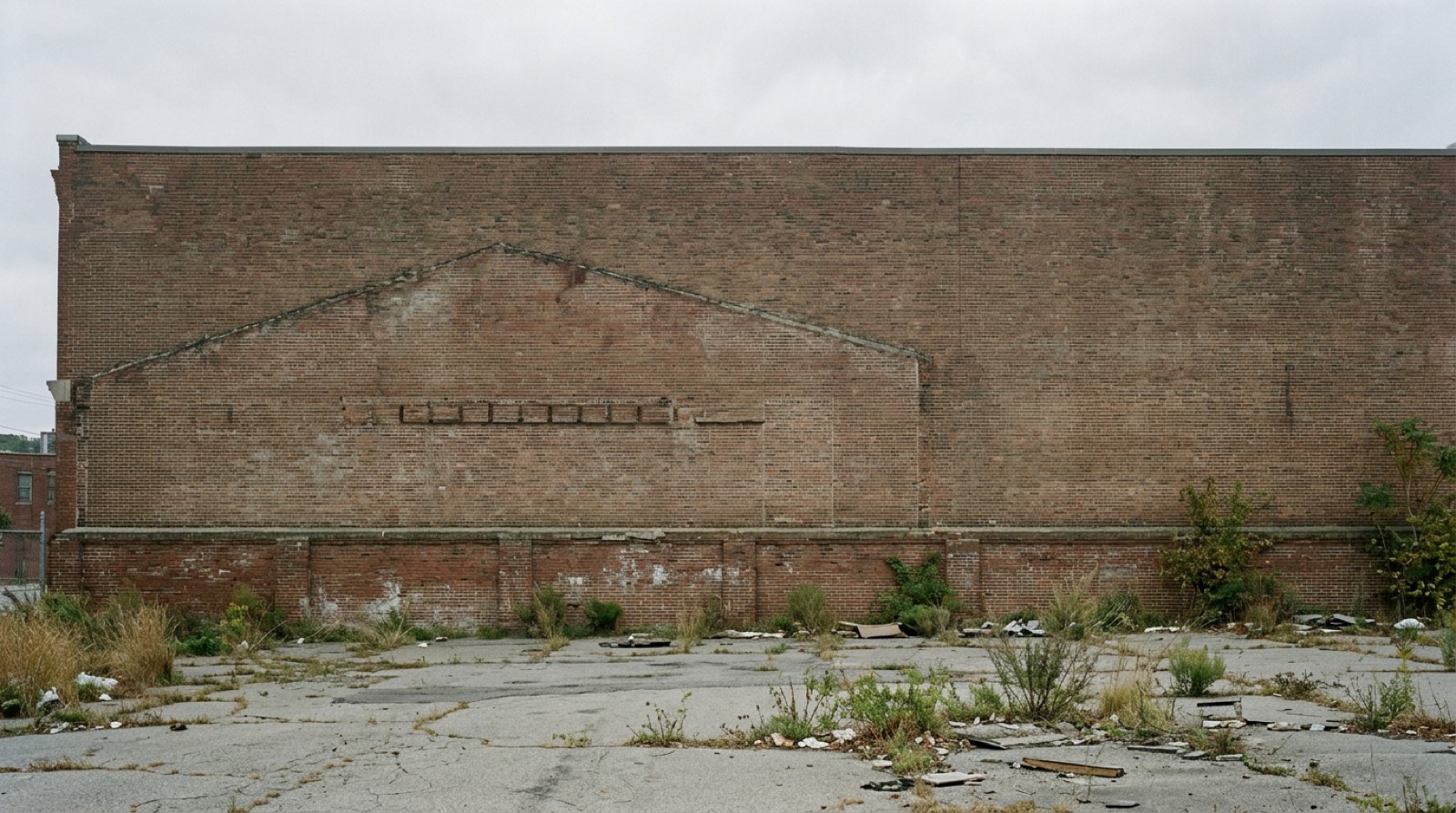
Dating the demolition
Roughly, and roughly is enough:
- Bare brick scars, no sealant. Recent, within a few years.
- A painted or stuccoed seal over the scars. Older, and somebody expected the gap to stay.
- A mature tree in the lot. At least fifteen years, probably more.
- Asphalt over the whole footprint, with a curb cut. The lot was formally converted to parking, which means a permit, which means a date somebody could look up.
The step in the sidewalk
Where the entrance was there is often a granite step still set into the sidewalk, or a rectangle of newer concrete where one was lifted.
Granite steps are heavy, valuable and awkward, so they are frequently left. A step to nowhere is the most direct thing on the site: it is exactly where the door was, at exactly the level the ground floor sat.
Practical
- The lot is private even when it looks abandoned. Read it from the sidewalk.
- Vacant lots collect glass. Look down as well as up.
- Overcast is better than sun: the scars on the party wall wash out in direct light.
- If the lot is in use for parking, do not stand in the aisle.