Step 1 of five
A Firehouse Still Running Engines
Built for apparatus in the 1890s and holding apparatus now. The rarest step on this axis and the easiest to read, because the door tells you before anything else does.
The five questions
| What it was built to do | House hand drawn and then horse drawn apparatus for one district, with a hose tower behind and quarters above. |
|---|---|
| What happens there now | The same. Different apparatus, same district, same doors, and the tower repurposed for antennas rather than hose. |
| What you can still read off it | The door opening, which is wider and taller than any domestic opening of that decade and has never been narrowed. Above it a granite band and a carved year. |
| Where you can stand to see it | The sidewalk opposite, from the far corner, which puts the whole front and the tower in one view. |
| What has gone for good | The horses, the stalls behind, and the hayloft door on the flank, bricked flush and still visible as a slightly different red. |
The four second read
Look at the opening. A building put up to hold apparatus has a door that will pass apparatus, and that door is between twelve and fourteen feet wide in a street of eight foot doors.
Nobody widens a door like that later and almost nobody narrows one, because both are structural work on the piece of wall that carries the most load. So the opening is close to a permanent record of what the building was for.
That single fact carries more of this paper than any other. A building's openings outlive its use, its owner and usually its name.
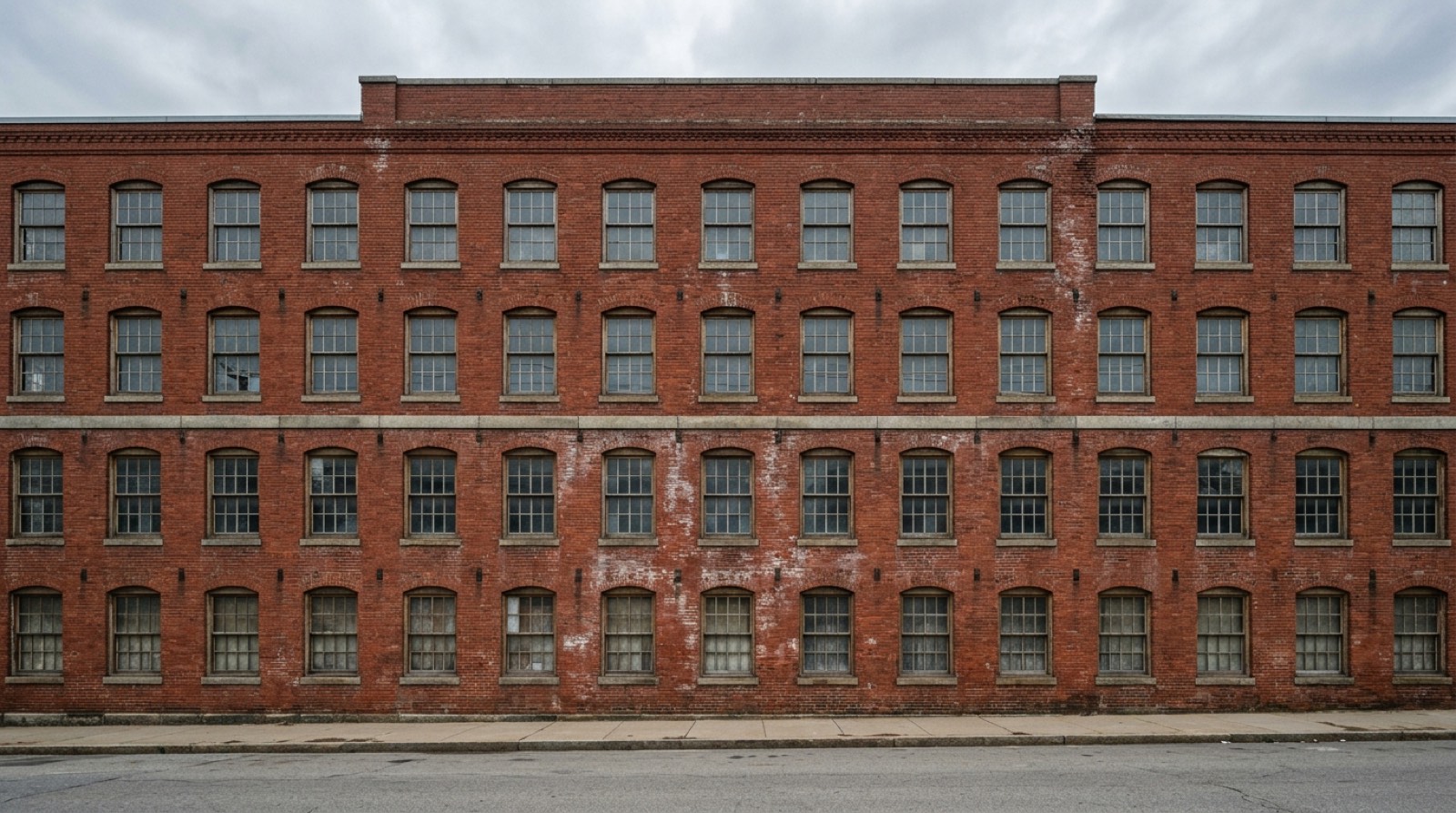
What the tower is for
Hose was canvas and canvas rots wet, so it had to hang full length to dry, which needs a shaft four stories high and about six feet square. Every firehouse of the period has one and nothing else in a residential street does.
The tower is therefore the second most reliable tell after the door, and it survives conversions: a firehouse turned into apartments keeps the shaft because taking it out costs more than leaving it.
The bricked flank
On the side elevation, above head height, a rectangle of brick sits slightly proud and slightly redder than the wall around it.
That was the hayloft door. Horses meant hay, hay went in at first floor level from a cart, and when the horses went the opening was filled from inside with whatever brick was to hand. The fill is always visible because new brick and old brick weather at different rates and mortar never matches twice.
Filled openings are the most common piece of evidence in this whole paper, and reading a front spends most of its length on them.
Why this step is rare
Because a district needs the same thing in the same place for a hundred and thirty years, and cities do not usually oblige.
The buildings that manage it are almost all infrastructure: fire, water, power, rail. Everything commercial moves, and everything industrial in this state stopped. That is why the other four steps have more entries than this one and why we put this one first.
Practical
- A working building. Do not enter, do not block the apron, and if the door opens, get well clear of it.
- The front is on a public sidewalk and can be looked at for as long as you like.
- Best light is late afternoon on the door side.
- Nobody will mind you standing there. Somebody may well come out and tell you about the tower.